Locating an effective pest control service in Fort Worth requires understanding local pest pressure driven by black gumbo clay soil, seasonal river moisture, and intense summer heat. Property owners dealing with wood-destroying subterranean termites, roof rats in attics, or German cockroaches need precise mechanical exclusion and targeted boundary applications rather than broad chemical sprays.
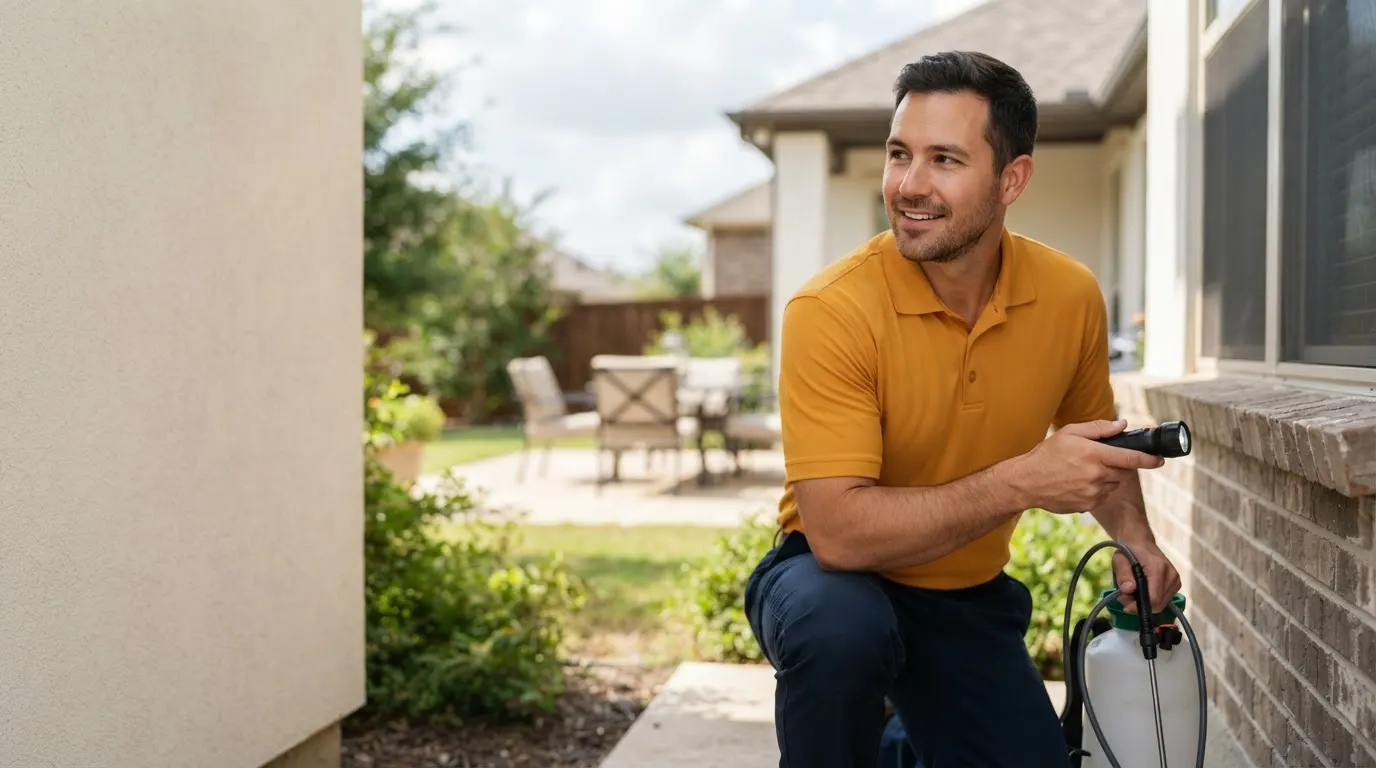
A professional pest control service in Fort Worth is an on-site structural remediation and barrier application that identifies, suppresses, and excludes wood-destroying insects, disease-carrying rodents, and household invaders across North Texas residential foundations.
Every service reflects the same meticulous attention to detail, whether it's a single job or a larger pest control service project across Fort Worth.
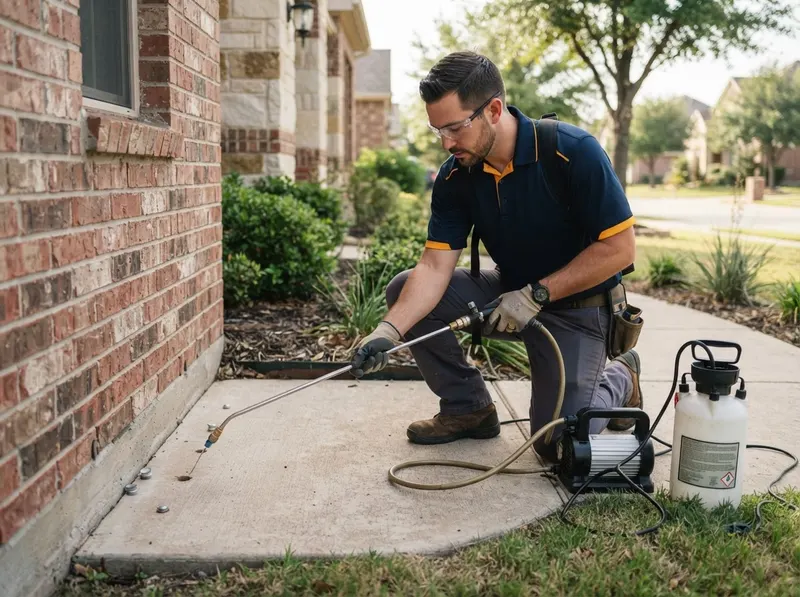
Liquid perimeter trenching and active monitoring station arrays target invasive subterranean colonies nesting beneath North Texas foundation slabs. Applicators dig continuous 6-inch wide by 6-inch deep soil trenches around exterior structural perimeters, injecting non-repellent termiticide solutions at high volume (4 gallons per 10 linear feet) to create an unbroken defensive zone that transfers through worker castes directly to the queen. Treatment protocols include drilling expansion joints along attached patios, sidewalks, and carports at 12-inch intervals to treat subterranean voids. Crawlspace stem walls and support piers receive localized vertical soil injections to eliminate hidden migration pathways before structural framing sustains hollowed timber damage.
Get a quote →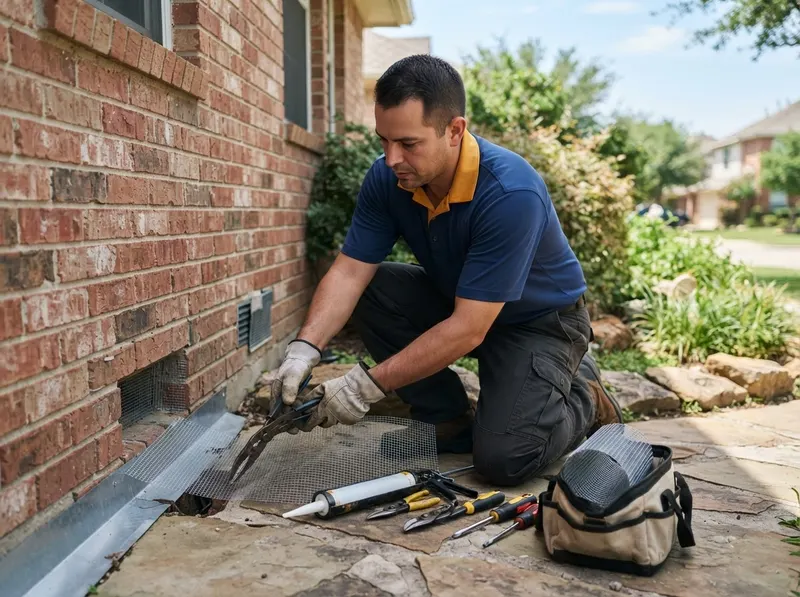
Comprehensive structural defense targeting roof rats and house mice utilizing roof-to-foundation entry routes across North Texas properties. Technicians identify entry fissures larger than 0.25 inches, sealing weep holes with galvanized metal mesh, anchoring exterior roofline soffit covers, and mounting heavy-gauge flashing over vulnerable plumbing chases and AC line sets. Interior remediation deploys targeted mechanical snap-trapping inside attics, crawlspaces, and drop ceilings to safely eradicate localized nesting populations without relying on indoor rodenticides that cause secondary decay odors. Exterior tamper-resistant bait stations are strategically anchored to perimeter fence lines to intercept foraging populations before they breach secondary structural envelopes.
Get a quote →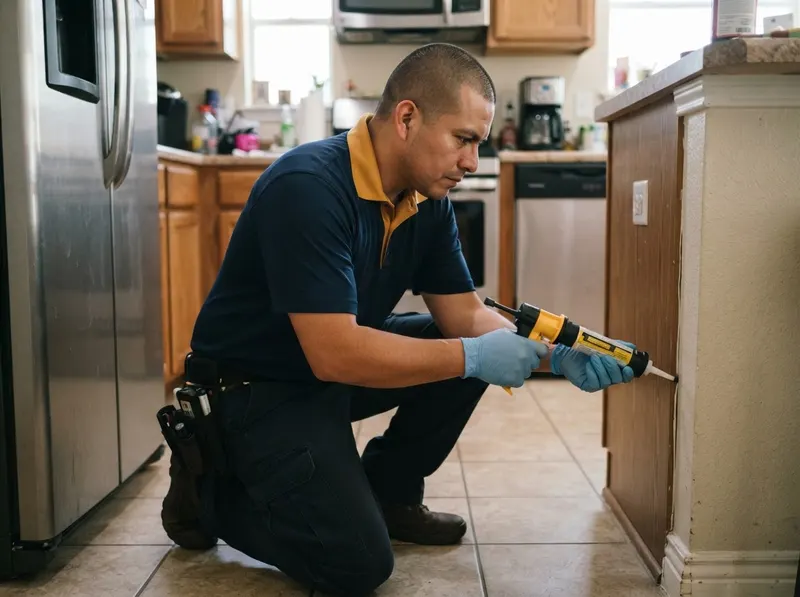
Specialized tactical eradication of American roaches navigating municipal sewer lines and persistent German roach colonies harboring inside warm appliance motor housings. Treatments utilize non-repellent bait matrices combined with synthetic insect growth regulators (IGRs) that chemically disrupt molting and stop reproductive cycles at the nymph stage. Micro-fine void dusting inside drywall switch plates, electrical junction panels, and sub-cabinet plumbing penetrations terminates hidden harborages without airborne drift. Follow-up treatments inspect internal appliance chassis and dishwashers, ensuring complete eradication of newly hatched egg cases (oothecae) before adult populations can re-establish breeding clusters.
Get a quote →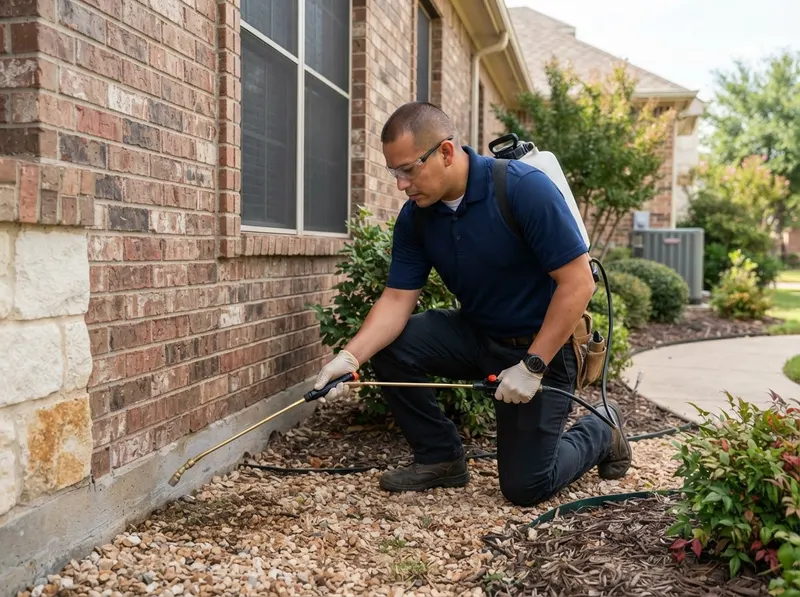
Continuous multi-tier boundary treatment establishing a resilient defense along exterior foundation walls, turf interfaces, and structural eaves. Technicians power-spray micro-encapsulated liquid barriers three feet upward along the foundation wall and six feet outward into surrounding soils to deter perimeter invaders such as crickets, earwigs, sowbugs, and spiders. Window frame thresholds, exterior utility penetrations, weep screeds, and door sweeps receive pinpoint applications to prevent migration during extreme weather transitions. Residual microscopic chemical capsules bond tightly with concrete and mulch beds, resisting degradation from direct sunlight, summer heat, and heavy rain cycles.
Get a quote →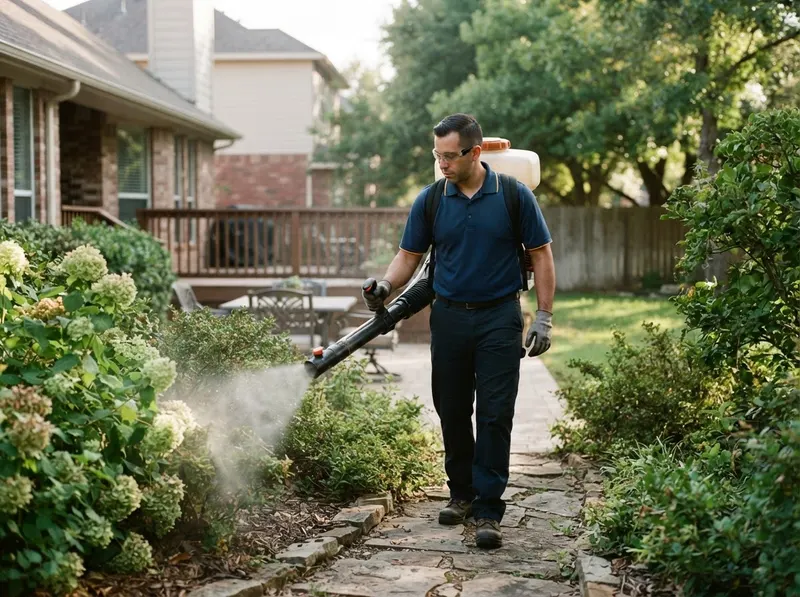
Targeted misting and biological larvicide distribution designed to interrupt breeding reservoirs around residential shaded turf and dense foliage. Low-volume backpack blowers apply botanical-derived insecticides and micro-encapsulated adulticides to the undersides of dense ornamental shrubbery, patio deck overhangs, and shaded fence lines where adult mosquitoes rest during hot midday hours. Standing drainage sumps, low grading swales, French drains, and decorative fountain basins receive slow-release biological tablets (Bacillus thuringiensis israelensis) to kill mosquito larvae before they pupate into biting adults, significantly reducing vector risk throughout the humid North Texas summer.
Get a quote →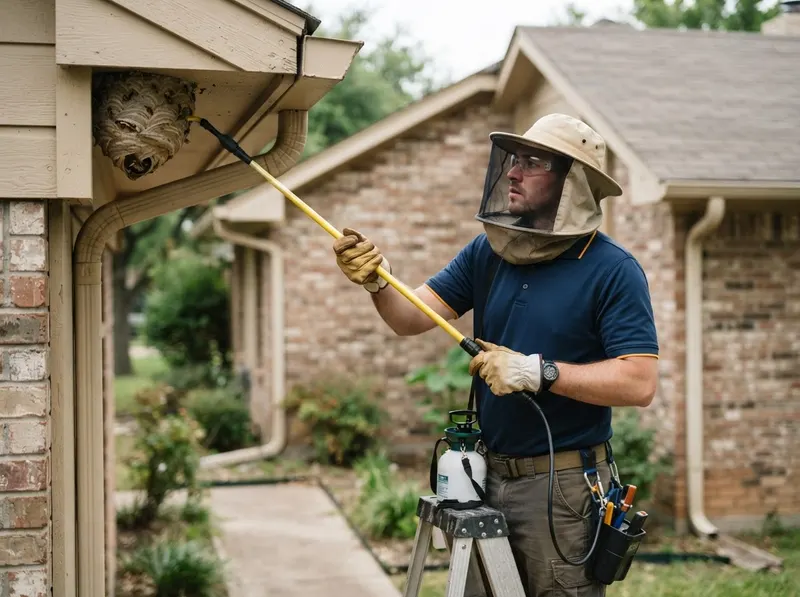
Rapid location and physical extraction of aerial paper wasp nests, mud dauber clusters, and aggressive subterranean yellowjacket hives. Protective technicians utilize direct pressurized freezing agents or localized insecticidal dusts to neutralize colonies nested beneath second-story soffits, patio rafters, decorative brick cornices, and playground equipment. Completed removals include residual barrier treatments applied directly to nesting anchor points to deter returning queens from re-establishing hives in the same footprint. Ground nest excavations are performed with specialized gear, completely neutralizing defensive subterranean yellowjacket burrows hidden in lawn turf or landscape borders.
Get a quote →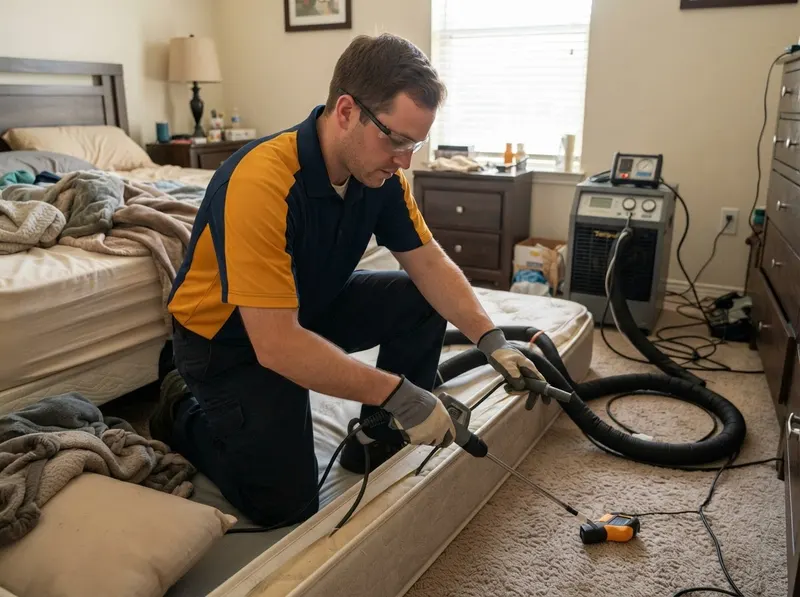
Rigorous multi-stage elimination targeting mattress seams, baseboard channels, wall framing, and upholstered furniture. Protocols combine dry structural steam heat reaching upwards of 135 degrees Fahrenheit to rapidly eradicate heat-sensitive adults, nymphs, and eggs with targeted residual non-repellent liquid and dust formulations applied to deep structural voids. Technicians carefully treat electrical faceplates, nightstand joints, bed frame fasteners, and carpet tack strips to ensure zero harborage survival. Follow-up visual inspections paired with active monitoring traps confirm total disruption of the insect life cycle across all treated living spaces.
Get a quote →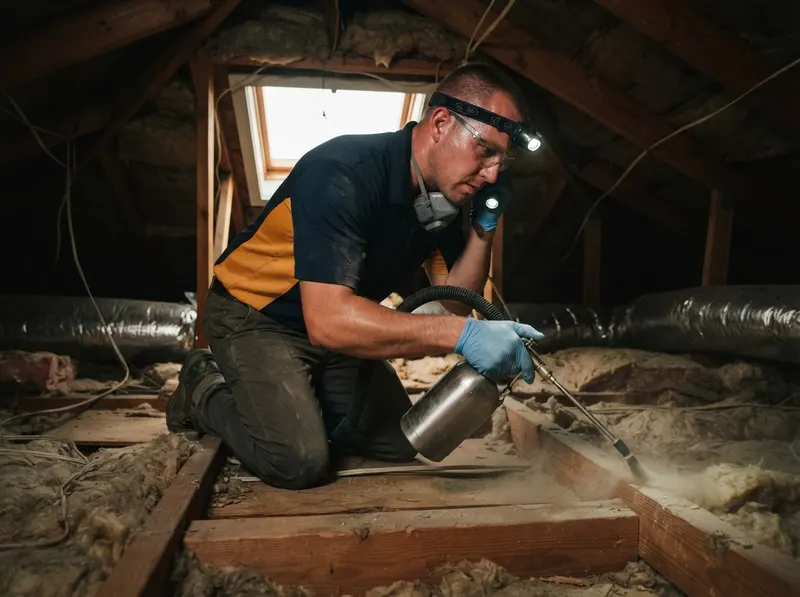
Deep-void mechanical dispersal of long-lasting inorganic desiccant dusts, such as amorphous silica gel and diatomaceous earth, within enclosed unfinished structural zones. Pneumatic equipment drives non-staining, odor-free dusts through attic rafters, pier-and-beam crawlspaces, and behind drop ceilings to coat dry pathways utilized by silverfish, brown recluse spiders, and wood-boring beetles. The applied inorganic minerals mechanically strip protective waxy insect cuticles, inducing dehydration and insect death without breaking down over time due to heat, delivering continuous structural defense inside inaccessible architectural spaces.
Get a quote →You get a firm, itemized quote for your pest control service before any work begins, no surprises, no pressure.
Careful prep, tidy work, and a full cleanup when we are done. We treat your home and belongings like our own.
The same trusted, background-checked team from the first call to the final check.
Selecting appropriate structural remediation depends strictly on pest biology, harborage location, and immediate infestation severity. If an attic exhibits distinct gnaw marks on electrical wiring, rhythmic nocturnal scurrying, or dark oblong droppings along rafter ties, choose full structural rodent exclusion paired with mechanical interior trapping; if an exterior foundation reveals mud tubes climbing brick weep screeds, choose liquid termiticide perimeter trenching. The trade-off centers on upfront mechanical labor versus long-term recurring protection: mechanical exclusion demands extensive physical sealing of rooflines, frieze boards, and expansion joints to permanently block entry, whereas chemical perimeter barriers establish non-repellent soil envelopes that actively eliminate colonies over 30 to 90 days but require annual monitoring.
For sudden interior swarms of German cockroaches inside plumbing chases or kitchen cabinetry, precision insect growth regulator baits and localized crevice micro-injections offer immediate reproduction disruption without displacing residents, whereas severe, deep-void infestations may necessitate extensive structural void dusting and repeated quarterly evaluations. Property managers handling multi-family buildings or rental duplexes should opt for exterior barrier maintenance to halt migration between adjoining walls, while single-family slab homes benefit most from localized weep hole screening and perimeter foundation soil saturation. If broad DIY retail canisters have repeatedly failed to break an egg-hatch cycle, switching to active residual active ingredients applied by licensed applicators provides the necessary lingering suppression across intense 100-degree summer heat cycles.
Choosing between localized spot treatments and whole-home perimeter envelopes also balances acute containment against comprehensive preventative defense; spot treatments resolve an isolated pantry beetle cluster or fire ant mound efficiently, but fail to stop migrating colonies when soil temperatures shift. In pier-and-beam properties, moisture levels often dictate whether wood-boring beetle remediation requires structural sub-floor drying alongside borate timber saturation or if mechanical surface dusting alone will suffice. High-canopy properties with mature live oaks and cedar elms necessitate combining ground-level perimeter bands with roofline barrier installations, acknowledging that tree squirrels and roof rats bypass ground soil applications entirely.
All service programs begin with an exhaustive physical walk-through to map localized moisture leaks, tree limb roof bridges, and slab fissures before a single application strategy is deployed.
Every project gets a firm, written price after a free on-site visit. Ranges below for orientation.
Tell us about your pest control service job and we'll send a clear, written quote, usually the same day. Or just call and talk to a real Fort Worth pro.
(682) 432-0308
Properties built on expansive black gumbo soils across Tarrant County endure intense seasonal shifting, which cracks concrete foundation slabs and pulls siding away from exterior masonry. These structural fractures grant immediate subterranean access to native Eastern subterranean termites and establish direct travel routes for roof rats moving inward from riparian zones near the Trinity River, Marine Creek, and Lake Worth. Older pier-and-beam foundations in historic districts like Fairmount, Ryan Place, and Arlington Heights require specialized sub-floor moisture inspections and crawlspace ventilation barriers to combat moisture-driven wood decay fungi and carpenter ant harborages. During dry summer heat waves when lawn irrigation runs frequently in master-planned communities like Mira Vista and Heritage, moisture differentials between saturated foundation perimeters and parched perimeter soils draw large populations of smokey brown roaches, field crickets, and subterranean fire ants directly toward residential exterior walls. Furthermore, commercial and residential corridors bordering the Fort Worth Stockyards, Sundance Square, and the Fort Worth Botanic Garden experience persistent exterior rodent pressures that migrate along storm water channels and aging municipal utility trenches. Addressing these environmental vectors requires targeted structural sealing, mechanical weep hole protection, and non-repellent soil barriers engineered specifically to withstand the rapid soil expansion and contraction characteristic of the North Texas geological basin.
Free estimates for Fort Worth & the surrounding area.
 Firefly Pest Control